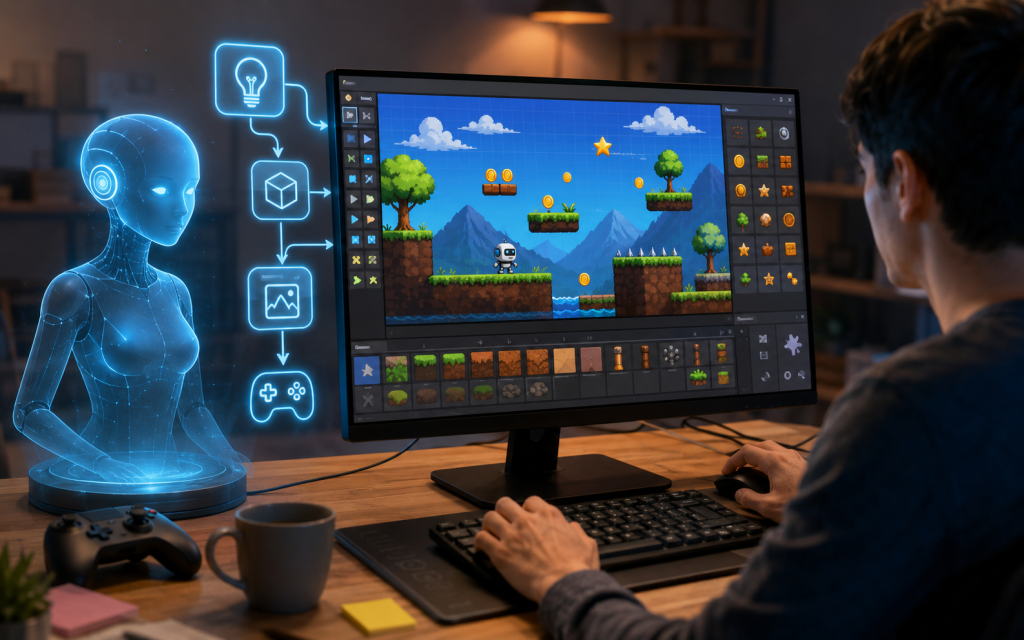
Creating a game once required programming knowledge, expensive software, and months of development time. Today, AI game creation tools are changing that completely. With the right prompts and simple descriptions, anyone can build a game without writing a single line of code. From generating characters and mechanics to designing levels and adding sound effects, AI can handle much of the technical work automatically. This shift has opened game development to beginners, creators, marketers, and hobbyists who want to turn ideas into real experiences quickly. In this guide, you will learn how AI builds complete games without coding skills, how to write better prompts, create engaging gameplay loops, design levels, and polish your final project for players. Whether you want to create a simple mobile game, a platformer, or an experimental indie project, these practical methods will help you move from idea to playable game faster than ever before.
Why AI Makes Game Creation Accessible
AI removes the biggest barriers in game development. Instead of writing code line by line, you simply tell the tool what you want in normal sentences. The system handles the technical work of building mechanics, levels, and visuals. This allows anyone with a creative idea to bring it to life quickly. The process works best when you start small and stay focused. A simple game with one clear mechanic is easier to build and improve than a large, complicated project. AI excels at generating content fast, so you can test ideas, make changes, and see results immediately. This speed turns game-making into an enjoyable and achievable activity for beginners.
Four Key Steps to Build a Game with AI
Follow these four steps to create a complete game without coding.
- Describe your core idea clearly. Explain the main action, goal, and overall style in simple sentences so the AI understands exactly what you want.
- Build the basic gameplay loop. Focus first on movement, controls, and the main player action until it feels smooth and fun.
- Add levels and progression. Create several stages that gradually increase in difficulty and introduce new elements.
- Polish the final details. Improve visuals, sound, menus, and feedback so the game feels complete and professional.
These steps keep the project manageable and produce a playable game in a short time.
Writing Effective Descriptions for Your Game
Clear descriptions lead to better results. Instead of saying make a fun game, write something specific such as create a side scrolling game where a character runs automatically and the player taps to jump over moving obstacles. Include details about the visual style, controls, and desired feeling. Break large ideas into smaller parts. First ask for the main character and movement, then add obstacles, then include scoring and levels. Test each addition immediately and refine with follow up descriptions like make the jump higher or slow down the obstacles slightly. This back and forth process helps the AI produce exactly what you imagine.
Creating Levels and Progression Easily
Levels give your game structure and keep players interested. Start with a simple first level that teaches the core mechanic. Each new level can introduce one fresh element, such as faster movement, new obstacles, or special items. Ask the AI to generate levels with increasing difficulty while keeping the same controls and style. Add small rewards like new characters or visual changes when players complete stages. This creates a sense of progress and encourages players to keep going. In AI-generated games, consistent rules across all levels make the experience feel planned and professional.
A good example of well-structured levels is Chaos Builder. You can try it on Astrocade. Notice how each section builds on the previous one while staying easy to understand.
Adding Sound, Visuals, and Polish
Sound and visuals make a game feel alive. Request background music that matches the mood and short sound effects for every action, such as jumping or collecting items. Ask for smooth animations and clear feedback so players know when they succeed or make a mistake. Improve the user interface by creating simple menus, score displays, and restart options. Make sure everything looks consistent across all levels. Small details like these turn a basic game into one that feels complete and enjoyable to play.
Four Practical Tips for Better Results
- Start small and test often. Build one feature at a time and play it immediately to catch problems early.
- Be specific in every description. Include details about speed, difficulty, style, and feeling.
- Refine gradually. Use follow up requests to improve anything that does not feel right.
- Keep the game focused. Avoid adding too many features in the first version.
These tips help you create higher-quality games without getting overwhelmed.
Testing and Improving Your Game
Play your game from beginning to end multiple times. Note any parts that feel confusing, too difficult, or not enjoyable. Ask friends to try it and listen to their honest feedback. Fresh eyes often spot simple issues you miss after working on the project for hours. Make small adjustments based on testing results. Improve controls, balance difficulty, and fix any bugs. Repeat this cycle until the game feels smooth and fun. Good testing turns a rough idea into a polished experience.
Launching and Sharing Your Game
Once your game feels ready, add a clear title screen, simple instructions, and an attractive end screen. Take good screenshots that show the best parts of gameplay. Write a short description that explains the game in one or two sentences. Share your game with friends and on platforms where players look for new experiences. Ask for feedback and be open to small updates after launch. Your first game is a learning experience that builds skills for future projects.
Wrapping Up
AI makes it possible for anyone to build complete games without coding skills. By writing clear descriptions, creating simple levels, adding polish, and testing thoroughly, you can turn your ideas into playable experiences in a short time. The process is straightforward when you start small and focus on making the core fun first. Whether you build your games with Astrocade or other easy tools, these methods help you create games that players enjoy. Start with one simple idea today, follow the steps in this guide, and watch your game come to life. Each project teaches you more and brings you closer to the kind of games you want to make. The ability to create without coding opens up exciting possibilities for creativity and fun. Begin your first game now and enjoy the rewarding process of bringing your ideas to players.
