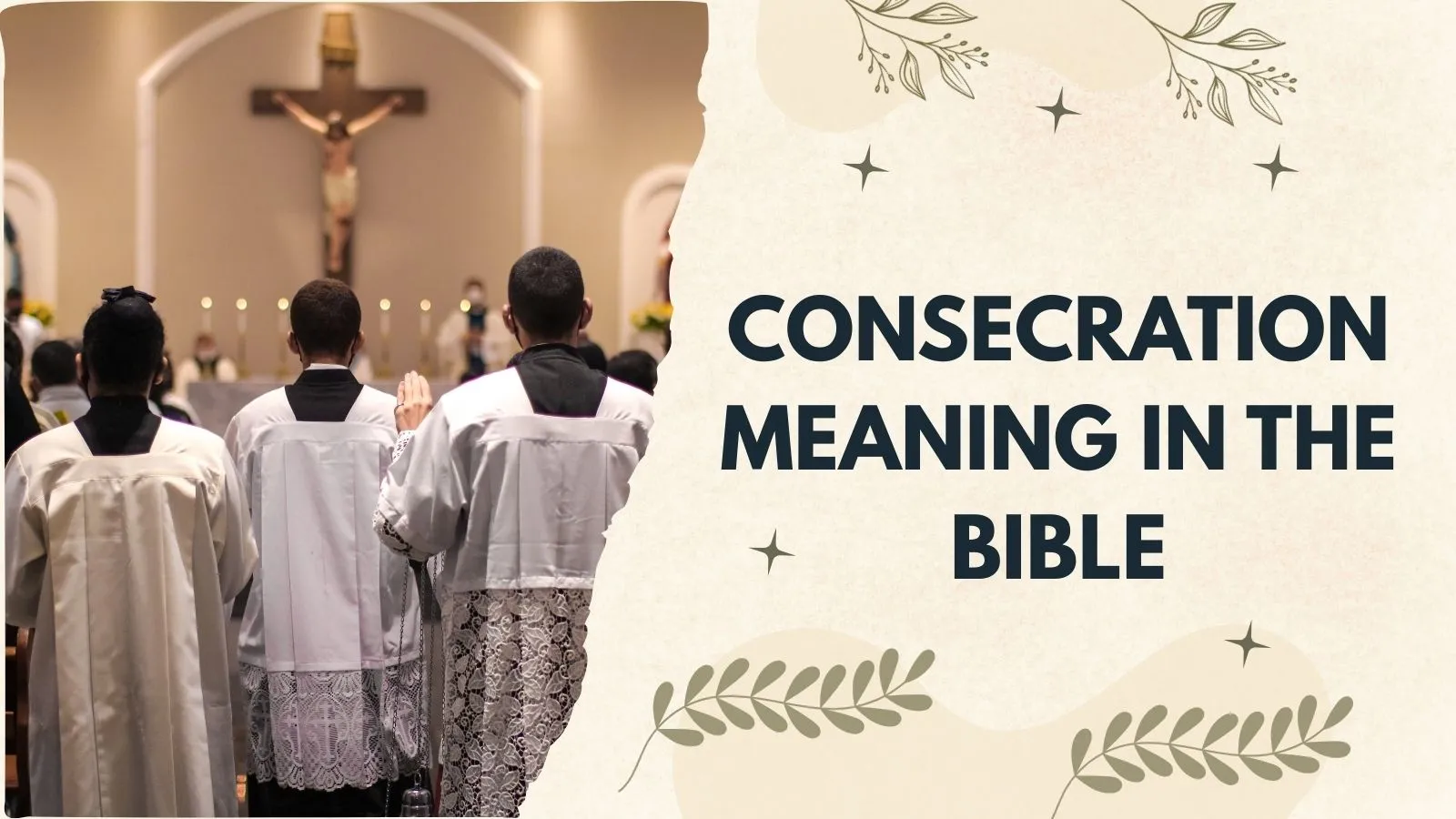
Hey, I want to share something that happened to me recently about consecration meaning in the Bible.
I was chatting with a friend when the term suddenly came up, and at first, I had no clue what it meant.
I found myself thinking, “Am I missing something here?” It was a little confusing, and I didn’t want to respond the wrong way.
So, I decided to dive in and understand the meaning and context of consecration. As I learned more, I realized how important it is to know these Biblical terms to follow conversations confidently and thoughtfully.
By understanding it, I could respond with clarity and now feel ready whenever I see consecration pop up in chats, sermons, or social media.
Biblical Meaning of Consecration
In the Bible, consecration refers to the act of setting something or someone apart for holy purposes. It is a deliberate act of dedication to God, often involving rituals, prayers, or symbolic gestures.
The Hebrew word for consecrate is qadash, meaning “to make holy, to sanctify, or to dedicate.
In the Old Testament, priests, temples, altars, and even certain offerings were consecrated. God instructed His people to set apart what was sacred from the ordinary (Exodus 28:41; Leviticus 8:10-12).
- Priests and Levites: In Exodus 28:41, God commanded Moses to consecrate Aaron and his sons as priests, setting them apart to minister in His presence. Their consecration symbolized purity, obedience, and readiness to serve God fully.
- Altars and Offerings: Leviticus 8 shows the consecration of the altar, emphasizing that offerings to God must be holy, set apart from everyday objects or actions.
- People and Lives: Consecration isn’t only about objects. Romans 12:1 encourages believers to present their bodies as living sacrifices, holy and pleasing to God, which is a form of personal consecration.
Consecration often carries both positive and cautionary meanings. Positively, it signals closeness to God, divine guidance, and spiritual readiness. It’s a call to live in purity, obedience, and devotion.
On the other hand, neglecting consecration or treating sacred things casually is warned against (Leviticus 10:1-2). God desires respect for what is holy, as it reflects our faith and dedication.
Spiritually, consecration is about alignment with God’s will. It reminds us that our time, talents, and resources are not just for ourselves they are gifts to be used for His glory.
When we consecrate our lives, we open ourselves to His presence, guidance, and transformation.
Spiritual Significance and Symbolism
Consecration symbolizes purity, surrender, and divine purpose. It is a spiritual tool that teaches us the value of prioritizing God above everything else.
When you consecrate your life, you are essentially saying, “Lord, this is Yours. Use it for Your glory.” This could be as simple as dedicating your day to prayer, your work to honest service, or your talents to serve others.
Spiritually, consecration encourages transformation. Like refining gold, God uses consecration to remove impurities from our hearts and prepare us for holy service. It fosters faith, hope, and trust in His timing.
Daily examples of consecration can include:
- Offering your first moments of the day to God in prayer.
- Using your gifts in ministry or helping someone in need.
- Choosing honesty and integrity in decisions, even when it’s challenging.
Each act of consecration strengthens your spiritual connection and opens your heart to divine messages and guidance.
Biblical Interpretations in Dreams or Real Life
Seeing or feeling consecration in a dream or life situation often carries a message of calling, preparation, or devotion.
- Peaceful scenarios: If you dream of someone being consecrated in calm and joyful surroundings, it signifies God’s blessing and readiness to guide you. It may indicate you are entering a season of spiritual growth or divine purpose.
- Challenging scenarios: If the dream feels intense or fearful, it may point to the need for repentance, focus, or personal dedication. God may be inviting you to realign your life with His holy plan.
In real life, feelings of consecration — like a sudden desire to dedicate time to prayer or help others — are gentle nudges from God. They remind us that our faith journey requires intention and surrender.
Always approach these experiences with prayer, reflection, and openness. Consecration is a divine message encouraging you to deepen your relationship with God.
Practical Lessons & Faith Insights
- Dedicate your day, talents, and intentions to God.
- Remember that consecration strengthens your faith and invites God’s presence.
- Use small acts of devotion to transform ordinary life into holy service.
FAQs:
1. What does it mean to consecrate someone in the Bible?
It means to set them apart for God’s service, often involving prayer, blessing, or holy rituals (Exodus 28:41).
2. Can I consecrate my daily life?
Yes! Romans 12:1 encourages presenting yourself as a living sacrifice, dedicating daily actions to God.
3. Is consecration only for priests or religious leaders?
No. Every believer can consecrate their time, work, and gifts to God.
4. What is the spiritual benefit of consecration?
It brings faith, divine guidance, spiritual growth, and peace by aligning your life with God’s will.
5. Can consecration appear in dreams?
Yes. Dreams of consecration often symbolize divine calling, preparation, or personal dedication to God’s purposes.
Conclusion:
Consecration in the Bible is a powerful invitation to set apart your life, heart, and actions for God. It is both a spiritual practice and a journey of faith, guiding you toward purity, purpose, and divine presence.
By embracing consecration, you allow God to transform your life, strengthen your faith, and lead you into hopeful, holy living.
Remember, every small act of dedication is a step closer to God’s perfect plan for you.

I’m Charles Stanley, a specialist in Biblical meanings, and I share my insights as the author on BiblicalMeaningz.com.
Here, I guide readers to understand the spiritual and Biblical significance of names and symbols.