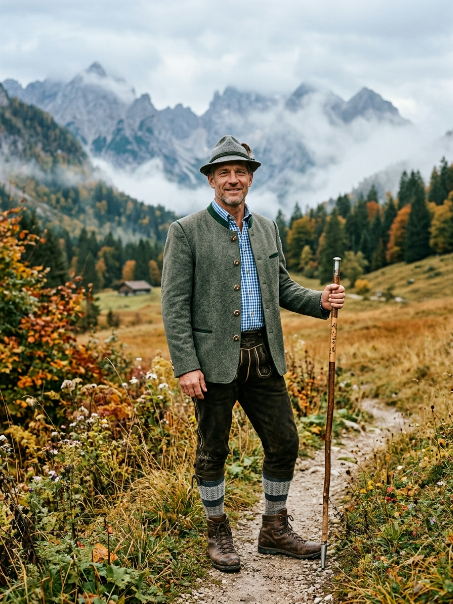
Ask anyone to picture traditional German style and they will describe the trousers and the dress but the garment German wardrobes actually built their reputation on is the jacket. The german jacket tradition, centered on Alpine loden wool and the unmistakable Janker silhouette, produced outerwear so functional and so quietly distinguished that it crossed from Bavarian farms into European fashion houses and back again, worn today by festival crowds in Munich and by people who have never touched a pair of lederhosen. Understanding the German jacket landscape — the styles, the wool, the occasions each version serves — is useful whether you are completing a full Trachten ensemble for 2026 or simply want the most durable heritage outerwear the continent produces.
This guide maps the styles, the material standard, the occasion logic, and the pairing rules across both traditional and everyday use.
The Style Family: From Janker to Loden Coat
The German jacket tradition is a family of related garments. The Janker anchors it: the straight-cut, collarless or stand-collar Alpine jacket with horn buttons and contrast trim, worn across Bavaria for two centuries and still the definitive festival and Tracht layer. The Walkjanker translates it into soft boiled wool for casual daily wear. Above them sits the formal Trachten jacket darker, finer, occasionally velvet-trimmed built for weddings and ceremonies.
Beyond the fitted jackets, the loden coat extends the same fabric into long overcoat territory: the deep-green, caped or plain loden Mantel that became international shorthand for Alpine elegance. Together the family covers every layer need from beer garden to opera house, all in one recognizable material language.
Loden: The Wool That Defines the Category
Every garment in the family stands on loden — the dense, brushed, felted Alpine wool developed across centuries of mountain weather. Loden’s virtues are the category’s virtues: substantial warmth without bulk, natural water resistance that sheds drizzle and light snow, a matte depth that photographs richly, wind resistance from the felted weave, and a lifespan measured in decades rather than seasons. Classic loden green is the signature color; gray, brown, and charcoal complete the traditional palette.
Boiled wool (Walk) is loden’s softer sibling — the same fiber, springier construction, slightly casual character. The imitation tier substitutes acrylic fleece and polyester blends that pill, soak, and shine wrong; the specification line naming genuine loden or boiled wool is the reliable screen, with honest 2026 pricing at roughly $90 to $180 accessible and $180 to $350 premium.
What to Wear When: The Occasion Map
The family maps cleanly onto occasions. Festival attendance — Oktoberfest, regional Volksfeste, German-American events — calls for the classic gray-green Janker over shirt and lederhosen, open in warm tents, buttoned after dark. Formal Bavarian occasions — weddings, church festivals, heritage dinners — call for the dark formal Trachten jacket over a white Trachtenhemd. Casual and daily contexts — beer gardens, Christmas markets, autumn errands — suit the Walkjanker over anything. Cold-weather elegance — city winters, travel, concerts — belongs to the long loden coat over ordinary clothes.
One buyer rarely needs all four at once; the map’s value is knowing which purchase your actual calendar calls for first. For most festival-oriented buyers, that is the classic Janker, with the others following as engagement deepens.
The Jacket’s Place in German Clothing Heritage
The jacket family also explains something larger about german clothing tradition: its genius has always been function elevated into identity. Loden began as shepherds’ weatherproofing; the Janker began as farm outerwear; both were absorbed into formal Tracht in the nineteenth century and then into international style in the twentieth — the rare folk garments that fashion adopted without altering. That history is why a Janker reads correctly in a beer tent and a boardroom-adjacent autumn street alike, and why German clothing heritage exports so well: the pieces work first and signal second.
For a modern buyer, the practical implication is confidence. A genuine loden jacket is not a costume element that expires when the festival ends — it is heritage outerwear with a hundred-year track record of belonging everywhere its owner goes between festivals.
Fit and Pairing Rules
Two rules govern fit across the family. In Tracht use, jacket length ends at or just below the lederhosen waistband so the leather and suspenders stay visible — the ensemble’s cardinal rule. In all uses, shoulders sit exactly at the shoulder edge, the traditional cut runs straight to layer over shirt and vest, and sleeves end at the wrist bone.
Pairing follows register and echo: gingham shirt under gray-green Janker for festivals, white Trachtenhemd under dark loden for ceremonies, plain knits under a Walkjanker for daily wear; horn buttons echoing horn buttons, green trim echoing sock flashes or hat cord. Women layer the same styles over dirndl with the hem-above-the-apron-bow rule, making the jacket the most shareable garment in a household’s German wardrobe.
Buying and Keeping for Decades
Order timing matters — common sizes and premium loden sell through from late August ahead of every festival season, so midsummer ordering secures first-choice color and size for 2026. Care asks almost nothing: brush after wear, air instead of washing, spot-clean spills, dry-clean rarely, store on a shaped hanger with cedar. Kept this way, loden garments serve twenty to forty years; inherited Janker and loden coats remain common in German families because the garments simply refuse to wear out on schedule.
Frequently Asked Questions
What is the most iconic German jacket?
The Janker — the straight-cut Alpine loden jacket with horn buttons and contrast trim that anchors Bavarian Tracht.
What makes loden wool special?
Dense felted Alpine wool: warm without bulk, naturally water- and wind-resistant, matte on camera, and durable for decades.
Which version should I buy first?
Festival-oriented buyers: the classic gray-green Janker. City and travel buyers: the long loden coat. Casual daily wearers: the Walkjanker.
Can German jackets be worn outside traditional events?
Yes — that crossover is the tradition’s signature. A Janker or loden coat over ordinary clothes reads as heritage elegance anywhere.
What should quality cost in 2026?
$90 to $180 for accessible genuine-wool tiers; $180 to $350 for premium loden and formal versions.
How long should the jacket sit in Tracht use?
Hem at or just below the lederhosen waistband — leather and suspenders stay visible, always.
