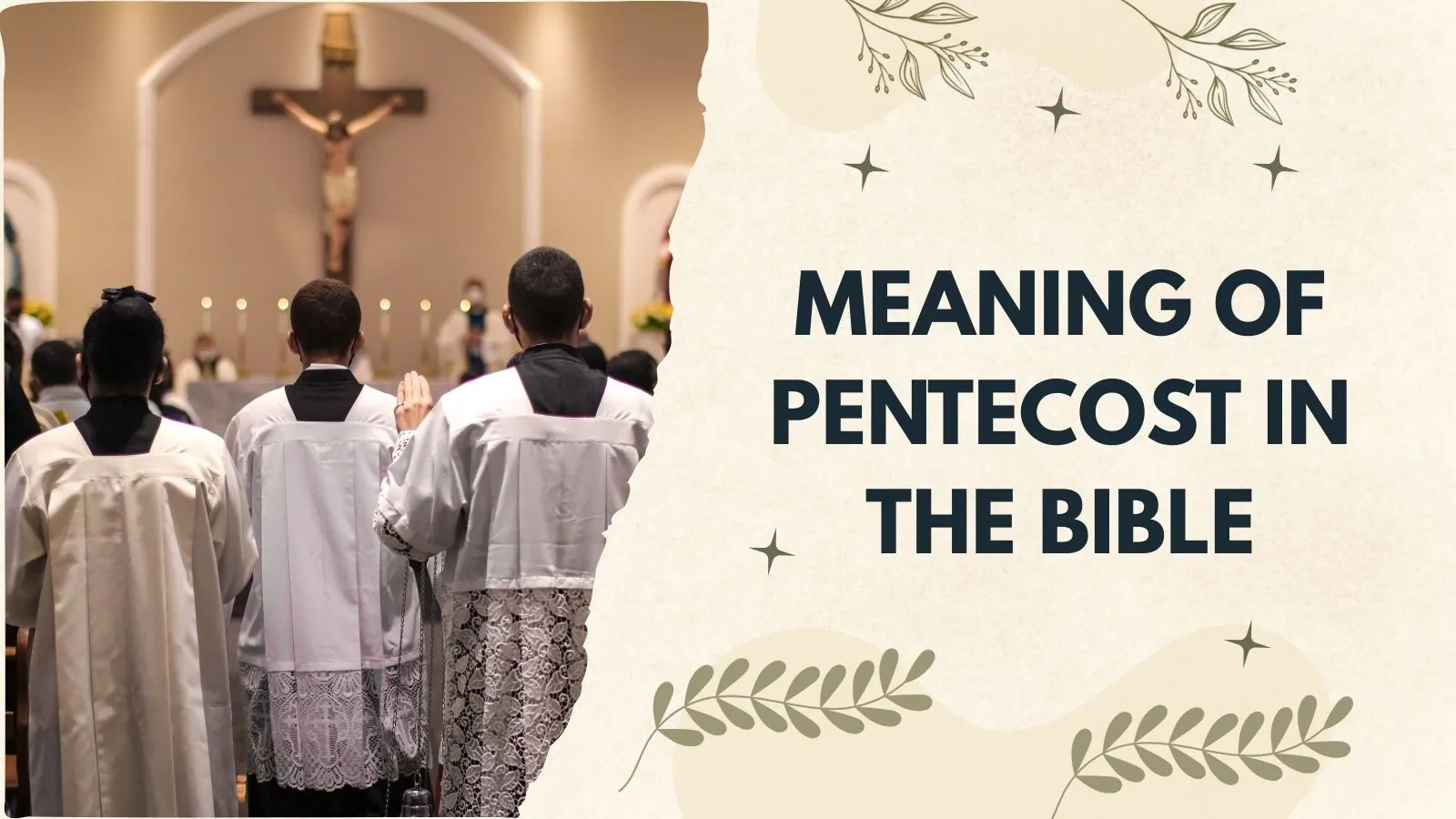
Hey, I want to share something that happened to me recently about the meaning of Pentecost in the Bible.
I was chatting with a friend when this term suddenly popped up, and honestly, I had no clue what it meant at first.
I kept thinking, “Am I missing something here?” It was a bit confusing, and I didn’t want to respond the wrong way.
So, I decided to look into Pentecost and understand its meaning and context. As I learned more, I realized just how important it is to know these Biblical terms—both for understanding Scripture and for feeling confident in everyday conversations.
By learning the proper meaning, I was able to respond thoughtfully, and now I feel ready whenever I see Pentecost mentioned in chats, social media, or discussions about faith.
Biblical Meaning of Pentecost
Pentecost is one of the most significant events in the New Testament. It occurs fifty days after Easter (or seven weeks after the Resurrection of Jesus) and marks the outpouring of the Holy Spirit on the disciples (Acts 2:1–4).
The word “Pentecost” itself comes from the Greek pentēkostē, meaning “fiftieth day”, highlighting its timing in the Jewish calendar as the Feast of Weeks.
The Bible describes this moment with vivid imagery: a sound like a rushing wind, tongues of fire, and the disciples speaking in languages from all over the world. Each symbol carries deep spiritual significance:
- Wind: Represents the invisible yet powerful movement of the Holy Spirit in our lives. Just as the wind cannot be controlled, God’s spirit moves in ways we cannot predict but can trust.
- Fire: Symbolizes purification, transformation, and divine presence. Fire refines and ignites, just as the Holy Spirit ignites faith and courage in believers.
- Speaking in tongues: Shows the Spirit’s power to break barriers, unify people, and spread the Gospel worldwide.
Acts 2:17–18 highlights this prophecy:
“In the last days, God says, I will pour out my Spirit on all people. Your sons and daughters will prophesy, your young men will see visions, your old men will dream dreams.”
This passage shows that Pentecost is not just a historical event—it is an ongoing spiritual promise.
Experiencing or reflecting on Pentecost reminds us that God’s guidance is always near, offering hope, strength, and courage to fulfill our faith journey.
Even today, Pentecost encourages believers to embrace spiritual awakening, to listen for God’s direction, and to rely on His power in everyday life.
If in moments of prayer, worship, or personal struggle, the Holy Spirit’s presence can transform fear into faith and doubt into divine assurance.
Spiritual Significance and Symbolism
Spiritually, Pentecost teaches us about connection, empowerment, and renewal. When the Holy Spirit filled the disciples, they were no longer ordinary followers—they became bold witnesses of God’s Word.
For modern believers, this event symbolizes:
- Transformation: Just as the disciples were changed, we too can be renewed by God’s Spirit, overcoming old fears or habits.
- Empowerment: Pentecost reminds us that faith is active. The Spirit equips us with gifts—whether courage, wisdom, or compassion—to serve God and others.
- Unity: Speaking in diverse languages illustrates that God’s love and message are universal, crossing every barrier of culture, language, or background.
Imagine feeling a sudden surge of peace, inspiration, or clarity during prayer. That may be a modern reflection of Pentecost—an invitation to trust God’s presence and guidance.
Even simple actions, like helping someone in need or sharing your faith, can reflect the transformative power of the Spirit, showing that Pentecost is not just a past event but a living reality in our daily walk with God.
Biblical Interpretations in Dreams or Real Life
Seeing Pentecost in a dream or spiritual experience often carries messages of hope and empowerment:
- Peaceful wind and gentle fire: God is encouraging you to trust His timing and guidance.
- Stormy or overwhelming scenes: May indicate spiritual challenges, asking you to seek strength through prayer and faith.
- Speaking in unknown languages or unusual voices: Could symbolize God opening new opportunities for communication, understanding, or ministry.
In real life, experiencing Pentecost moments could appear as sudden clarity in decisions, boldness to speak your faith, or a sense of divine peace in chaotic situations.
It reminds us that the Holy Spirit is active, guiding, comforting, and equipping us for God’s purpose.
Practical Lessons & Faith Insights
From Pentecost, we learn to:
- Trust the Holy Spirit for guidance in life decisions.
- Embrace transformation, letting God refine your heart and character.
- Act with faith, sharing hope and love with others, knowing you are empowered by God.
FAQs:
1. What does Pentecost mean in the Bible?
Pentecost marks the outpouring of the Holy Spirit on the disciples, empowering them to spread God’s Word (Acts 2:1–4).
2. Why is Pentecost celebrated 50 days after Easter?
It represents the fiftieth day after Jesus’ resurrection and fulfills the prophecy of the Holy Spirit coming to believers.
3. What is the significance of fire and wind in Pentecost?
Wind symbolizes the Spirit’s power, and fire represents purification, transformation, and divine presence.
4. Can Pentecost appear in dreams?
Yes, it can appear as a symbol of spiritual awakening, empowerment, or divine guidance in your life.
5. How can I experience Pentecost in my daily life?
Through prayer, worship, acts of service, and trusting the Holy Spirit, you can feel God’s presence and guidance today.
Conclusion:
The meaning of Pentecost in the Bible is a powerful reminder of God’s Spirit at work in our lives.
It speaks of transformation, unity, courage, and divine guidance. As you reflect on Pentecost, allow yourself to be open to the Holy Spirit’s presence, trusting that God’s power can renew your faith, fill you with hope, and guide your every step.

I’m Max Lucado, a specialist in Biblical Meanings, and I share my reflections as the author on BiblicalMeaningz.com.
Here, I help readers explore the spiritual and Biblical significance of names and symbols.