Sharing your faith can feel intimidating. Many Christians believe evangelism is reserved for pastors, missionaries, or people with a special gift for public speaking. But the truth is simpler and far more encouraging: presenting the gospel isn’t about performance. It’s about clarity, love, and a willingness to speak honestly about what you believe.
This guide walks through a practical, step-by-step approach to sharing the gospel with confidence, whether you’re talking to a coworker, a family member, or a stranger who asks a genuine question about faith.
Why So Many Christians Hesitate
Fear of rejection is the number one reason believers stay silent about their faith. There’s also the fear of saying the “wrong thing,” not knowing enough Scripture, or being seen as pushy. These are valid concerns, but they often come from a misunderstanding of what evangelism actually requires.
You don’t need a theology degree to share the gospel. You need a clear understanding of the core message, a genuine love for the person in front of you, and the willingness to start the conversation. The rest can be learned and refined over time.
Start With the Right Heart Posture
Before any conversation happens, your inward posture matters more than your words. Gospel presentation that comes from obligation or guilt rarely lands well. Gospel presentation that comes from genuine care almost always opens a door, even if the person isn’t ready to respond right away.
Pray first. Ask God to give you opportunities and the right words when the moment comes. Prayer softens your own heart and prepares you to listen rather than lecture.
Expect resistance, not perfection. Not every conversation ends in a decision for Christ, and that’s okay. Your job is to plant seeds and be faithful with the opportunity, not to control the outcome.
Lead with humility. You’re not delivering a verdict from a position of superiority. You’re one person who has found something valuable, sharing it with someone else.
Step 1: Build a Bridge Through Relationship
The most effective gospel conversations rarely happen out of nowhere. They grow out of authentic relationships where trust has already been established. Take time to genuinely listen to people’s stories, struggles, and questions before jumping to answers.
Ask open-ended questions like:
- “What do you think happens after we die?”
- “Have you ever thought much about faith or spirituality?”
- “What’s your experience been with church or religion?”
These questions aren’t tricks to steer the conversation. They’re genuine invitations for the other person to share, which often naturally opens the door for you to share too.
Step 2: Share Your Testimony
Your personal story is one of the most powerful evangelism tools you have. Nobody can argue with your own experience. A simple testimony structure includes three parts:
- Before — What your life or mindset looked like before you encountered Christ.
- How — What happened that led to a change (a moment, a season, a realization).
- After — How your life, perspective, or peace has changed since.
Keep it under two minutes. Practice telling it a few times so it feels natural rather than rehearsed. A clear, honest testimony often does more to soften a skeptical heart than any argument could.
Step 3: Present the Core Gospel Message
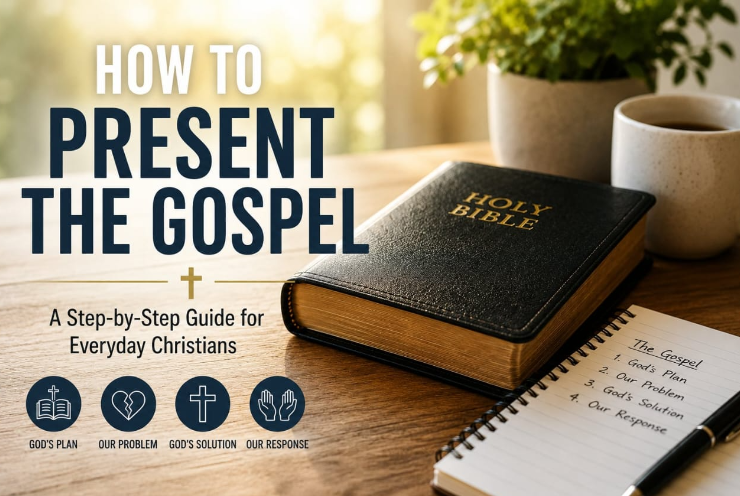
Once there’s an opening, it helps to have a clear, simple framework in mind. One widely used approach breaks the gospel into four parts:
God loves you and created you for relationship with Him. Scripture is clear that we were made on purpose and for a purpose (John 3:16).
Sin has separated us from God. Every person falls short of God’s standard, and that separation is the root of the brokenness we experience in the world and in ourselves (Romans 3:23).
Jesus paid the price for that separation. Through His death and resurrection, Jesus made a way back to God that we could never earn on our own (Romans 5:8).
We respond through faith. Salvation isn’t about good works or religious performance. It’s a response of faith and trust in what Jesus already accomplished (Ephesians 2:8-9).
Walking someone through these four truths, using their own language and pace rather than a rigid script, keeps the conversation natural instead of forced. For a deeper look at how these truths connect — especially useful when talking with someone who has genuine intellectual questions about who God is and who Christ is — True Life breaks the full journey down in a way that’s easy to follow and share.
Step 4: Handle Questions and Objections With Grace
Almost every gospel conversation will eventually include a challenging question: “What about other religions?” “How can a loving God allow suffering?” “Isn’t the Bible just a book written by men?”
You don’t need to have a perfect answer for everything. It’s completely acceptable to say, “That’s a great question — let me think about it and get back to you,” or “I don’t know the full answer, but here’s what I do believe.”
Basic apologetics training can help you respond to common objections with confidence rather than defensiveness. The goal isn’t to win an argument. It’s to remove obstacles that keep someone from considering the truth of the gospel honestly.
Step 5: Know Where to Point People Next
A single conversation rarely covers everything. Part of effective gospel presentation is knowing how to follow up. Invite the person to church, offer to study the Bible together, or point them toward resources that go deeper than a single conversation ever could.
This is where ongoing discipleship and training matter. Believers who want to grow more confident in evangelism, apologetics, and gospel conversations often benefit from structured resources rather than trying to figure it all out alone. True Life offers training designed to help everyday Christians grow in exactly these areas — from learning how to share their faith naturally to understanding the Bible more deeply and defending it with confidence.
Closing Encouragement
Presenting the gospel isn’t about having flawless delivery or memorized answers to every possible objection. It’s about being willing to show up, speak honestly, and trust that the message itself carries its own power.
Every believer has a story worth telling and a message worth sharing. The more you practice — through prayer, relationship-building, and ongoing training — the more natural these conversations will become. Start small, stay faithful, and trust that God is at work in every conversation, even the ones that don’t end the way you hoped.
