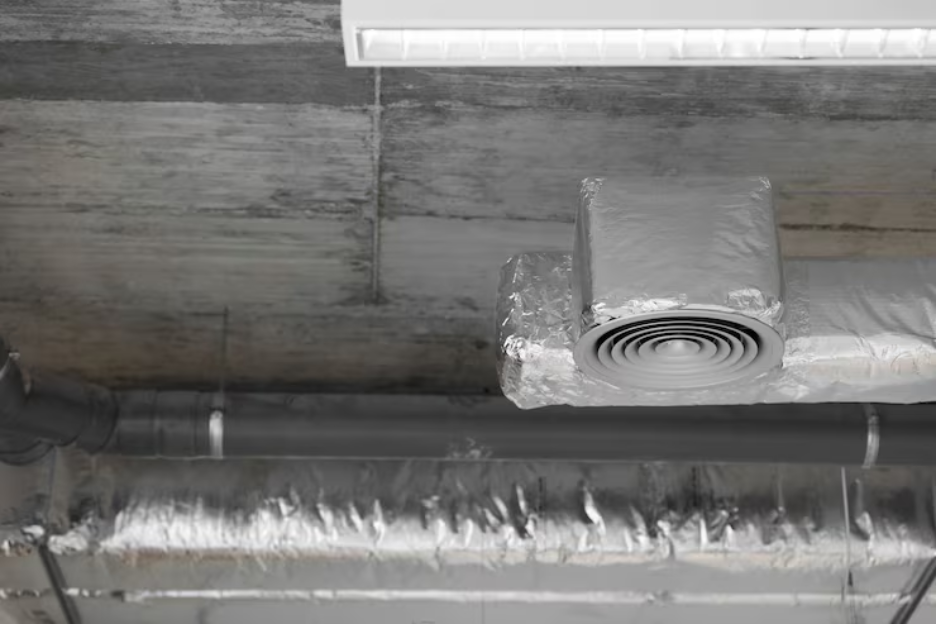
Aerosol duct sealing is an advanced method used to locate and seal leaks inside HVAC duct systems from the inside. Instead of manually accessing and repairing ducts—often hidden behind walls, ceilings, or floors—this technology uses a fine mist of sealing particles that automatically finds and closes gaps and cracks.
For both residential and commercial buildings, duct leakage is a common but often overlooked problem. It can lead to higher energy bills, uneven heating or cooling, poor indoor air quality, and unnecessary strain on HVAC systems. Aerosol duct sealing offers a faster, less invasive, and highly effective solution compared to traditional manual sealing methods.
What Is Aerosol Duct Sealing?
Aerosol duct sealing is a process that uses specialized equipment to inject a sealant mist into the ductwork while the HVAC system is pressurized. As air escapes through leaks in the ducts, the tiny aerosol particles are carried toward those openings. When the particles reach a leak site, they accumulate and bond together, gradually sealing the gap.
The process continues until most of the leaks in the system are sealed. Because the sealant only attaches to escaping air, it does not coat the inside of the ducts evenly. This makes it highly efficient and targeted.
This method is especially useful in ducts that are difficult or impossible to access without major construction work.
How the Aerosol Duct Sealing Process Works
The process begins with preparation of the HVAC system. Contractors isolate the duct system and temporarily block vents so pressure can build inside. Once the system is ready, specialized equipment is connected to introduce the aerosol sealant.
As the HVAC system is pressurized, air begins escaping through leaks. The aerosol particles follow this airflow and naturally move toward those leak points. Over time, the particles stick together and form a seal.
Technicians monitor the system throughout the process using sensors that track pressure changes and leakage rates. Once the leakage drops to an acceptable level, the process is stopped.
Finally, the system is tested again to ensure that sealing performance meets efficiency standards.
Why Duct Leakage Is a Serious Problem
Many homeowners are unaware that a significant portion of conditioned air can be lost through duct leaks. In some cases, up to 20–30% of air can escape before reaching living spaces.
This creates multiple issues. First, energy is wasted because heating or cooling is produced but never fully delivered to the rooms. Second, the HVAC system must work harder to maintain desired temperatures, increasing wear and tear. Third, leaks can pull in dust, insulation particles, or unfiltered air from attics and crawl spaces, affecting indoor air quality.
Over time, this leads to higher utility bills and reduced comfort in the home.
Advantages of Aerosol Duct Sealing
One of the biggest advantages of aerosol duct sealing is its ability to reach hidden leaks. Traditional sealing methods require physical access to ductwork, which often involves cutting into walls or ceilings. Aerosol sealing eliminates this need, making the process far less disruptive.
Another major benefit is speed. Most residential duct systems can be sealed within a few hours. Larger commercial systems may take longer, but the process is still significantly faster than manual repairs.
Energy efficiency improvements are also immediate. Once leaks are sealed, conditioned air flows more effectively to living spaces, reducing wasted energy and improving HVAC performance.
The method is also highly precise. Since the sealant only attaches to escaping air, it avoids unnecessary coating inside the duct system, preserving airflow capacity.
Residential vs Commercial Applications
Aerosol duct sealing is used in both residential and commercial buildings, but the scale and complexity can differ significantly.
In residential homes, the goal is typically to improve comfort and reduce energy bills. Many older homes, especially those with ductwork in attics or crawl spaces, benefit greatly from this technology.
In commercial buildings, the focus is often on efficiency and operational cost savings. Office buildings, hospitals, hotels, and retail spaces rely heavily on HVAC systems, so even small improvements in duct efficiency can lead to substantial long-term savings.
Large facilities may also use aerosol duct sealing as part of broader energy efficiency programs or green building certifications.
When Should You Consider Aerosol Duct Sealing?
There are several signs that your duct system may benefit from sealing. Uneven temperatures across rooms, where some areas feel too hot or too cold, often indicate air leakage. Similarly, higher-than-normal energy bills without changes in usage patterns can suggest HVAC inefficiency.
Weak airflow from vents, excessive dust accumulation, or poor indoor air quality may also point to duct leaks. In older buildings, duct systems naturally degrade over time, making sealing an effective upgrade.
A professional HVAC inspection is usually the best way to determine whether aerosol duct sealing is appropriate.
Cost Considerations and Energy Savings
The cost of aerosol duct sealing depends on the size of the building and the complexity of the duct system. While the upfront investment may be higher than simple patch repairs, the long-term savings often justify the expense.
By reducing air leakage, HVAC systems operate more efficiently, which can lead to noticeable reductions in monthly energy bills. Over time, these savings can offset the initial cost of the service.
In many cases, homeowners also benefit from improved comfort and reduced maintenance costs, since the HVAC system experiences less strain.
Aerosol Duct Sealing vs Traditional Methods
Traditional duct sealing methods involve manually locating leaks and applying mastic sealants or foil tapes. While effective, this approach is time-consuming and often impractical for ducts hidden behind structures.
Aerosol duct sealing offers a more comprehensive solution because it can reach leaks that are not visible or accessible. It also provides measurable results, as technicians can track leakage reduction during the process.
However, it is not always a replacement for mechanical repairs. If ducts are severely damaged or collapsed, physical repair may still be required before or alongside aerosol sealing.
Environmental Benefits
Improving duct efficiency also has environmental advantages. When HVAC systems consume less energy, overall electricity demand decreases, reducing greenhouse gas emissions associated with power generation.
Aerosol duct sealing therefore contributes to energy conservation efforts and supports greener building practices. In commercial settings, it can also help buildings achieve sustainability certifications or meet regulatory efficiency standards.
Final Thoughts
Aerosol duct sealing is a modern, efficient, and minimally invasive solution for improving HVAC system performance. By addressing hidden leaks inside ductwork, it helps reduce energy waste, improve indoor comfort, and extend the life of heating and cooling systems.
For homeowners and businesses dealing with uneven temperatures, rising energy bills, or aging duct systems, this technology offers a practical and long-term solution. While it may not replace structural duct repairs in severe cases, it is one of the most effective methods for sealing widespread leaks quickly and efficiently.
As energy efficiency becomes more important in both residential and commercial buildings, aerosol duct sealing continues to grow as a preferred choice for optimizing HVAC performance.
